Sak Yant in Thai สัก – sak (to stuff) ยันต์ – yant (yantra). Yantra is a Sanskrit word that comes from Vedic culture, means literally ‘that which restrains’, ‘instrument’, ‘amulet’, ‘mechanism’. Sak Yant tattoos is an ancient tradition of ritual that endow their wearer with special mystical powers.
MỤC LỤC
History of Sak Yant
The first mentions of Sak Yant are present in ancient Chinese chronicles and date back to the first century B.C. Yantras were imprinted in southwestern China and northeastern Vietnam. There are historical references in the annals to warriors applying yantras to their clothing to protect them from weapon strikes. Over time, the tradition transformed, absorbing attributes of Brahmanism and Buddhism. Today, Sak Yant is spread throughout Southeast Asia, as far as Indonesia and the Phillipine Islands.
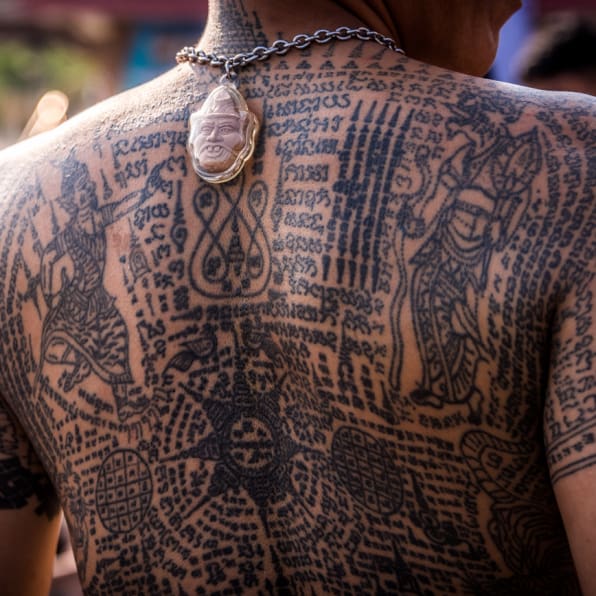
Sak Yant represents patterns consisting of mantras (Thai: kata) in the Pali language. Pali is the language of northern India, the birthplace of Buddha, in which the entire canon of the most ancient Buddhist school, Theravada, is composed. The Pali language does not have its own script, so it uses the letters of the Khmer alphabet.
The patterns are folded into geometric figures, which have different meanings. Basically the meaning of Sak Yant is some material purposes, for example – it is a defence against enemies, strikes with weapons and attracting good luck, wealth. But an ordinary drawing can not have mystical power. This is what distinguishes a real Sak Yant from a simple tattoo made in a salon.
Meaning of Sak Yant tattoos
Sak Yant can only be done by Buddhist monks or Reishi (Rishi – sages in Sanskrit) initiated in this tradition. The place where the Yant is applied is called Samnak Sak Yant. As a rule it is a Buddhist temple. A Reishi with a high level of moral purity is able to transmit power through the Yant. To activate the magical power of the yantra, the monk recites a kata (mantra), thus infusing the image with the power of prayer. For a yantra to work, its owner must adhere to the five Buddhist limiting principles:
- truthfulness (do not lie)
- non-violence (do not kill)
- non-appropriation (do not steal)
- not to commit adultery
- not to take alcohol or drugs
True Sak Yant can only be done by men, as a monk cannot touch a woman. In addition, in many of Thailand’s most sacred places and temples, women are forbidden to enter.
Sak Yant for women
A few years ago it became known that the ritual magical tattoo Sak Yant made Angelina Jolie. It turned out that the master who made her yantra is not a monk. He’s an ex-monk. The yant was made for a lot of money in violation of all the rules of tradition and caused a wave of condemnation among authoritative masters.
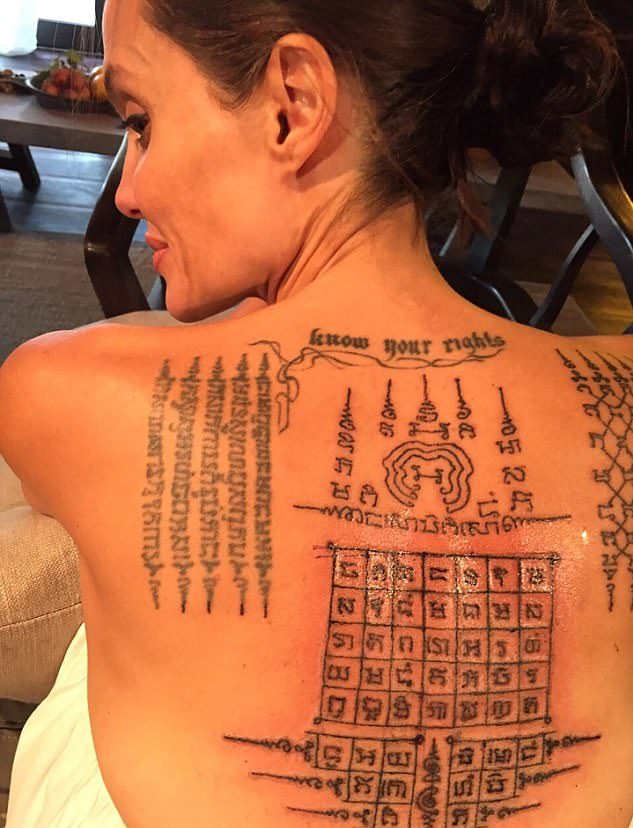
Now a lot of tattoo parlours and individual tattoo artists offer their services, which they call Sak Yant, but it will be the most ordinary tattoo. The increased popularity of ritual tattoos has led to the emergence of Ajans (Ajarn). Typically, an Ajarn is a former monk or tattoo artist who has gained some sort of recognition as someone who can perform the Sak Yant ritual. These Ajarns tattoo everyone and some people believe in their magical powers.
Who can do Sak Yant?
Reishi (Rishi), usually hermits who have taken severe vows and live a life of restriction. Through asceticism, a Reishi achieves inner purity, the reward for which will be superpowers. It is believed that such an ascetic is able to ‘see’ exactly your Sak Yant. ‘See’ your destiny and your future and make the Yant that you need. Rishi will not charge you any money as he lives in renunciation. You cannot tell him what to do, as he can see better than you what you need.
Traditionally, the strongest Rishi are found in monasteries in northern Thailand and Laos. This is where the centres of Buddhism are concentrated, where traditions are kept and passed on.
Ajang (Adjarn) are former monks or masters who are quite authoritative in the tradition. It is believed that an Ajahn must practice meditation, mantra recitation, and vipassana to have Sak Yant abilities. Some of the Ajans do this, but some do not. Ajans do Sak Yant for money or donations. Generally, the Ajahn has a catalogue of designs and you can choose the drawing. Most of them do magical tattoos for women. The word ajarn probably comes from the Sanskrit acharya, which means teacher.
Tattoo parlours. Common parlours that enjoy an increased demand for an exotic product. May include mantra recitation and other rituals in the tattooing process. Sometimes the process may take place in front of an altar. Whether or not these tattoos may or may not have mystical powers is up to you to decide.
Every year, the Sak Yant Festival, a special ceremony to honour the teachers of the ancient tradition of mystical tattoos, is held in the suburbs of Bangkok. This festival takes place during the day and night, during which people fall into trance-like states.
The main designs of Sak Yant & significance
Ong Phra (Thai: องค์พระ; translation: Buddha’s body) is one of the most important symbols. It signifies the Buddha himself. At the top is the Moon lighting the way in darkness and the Sun lighting the way in the daytime.

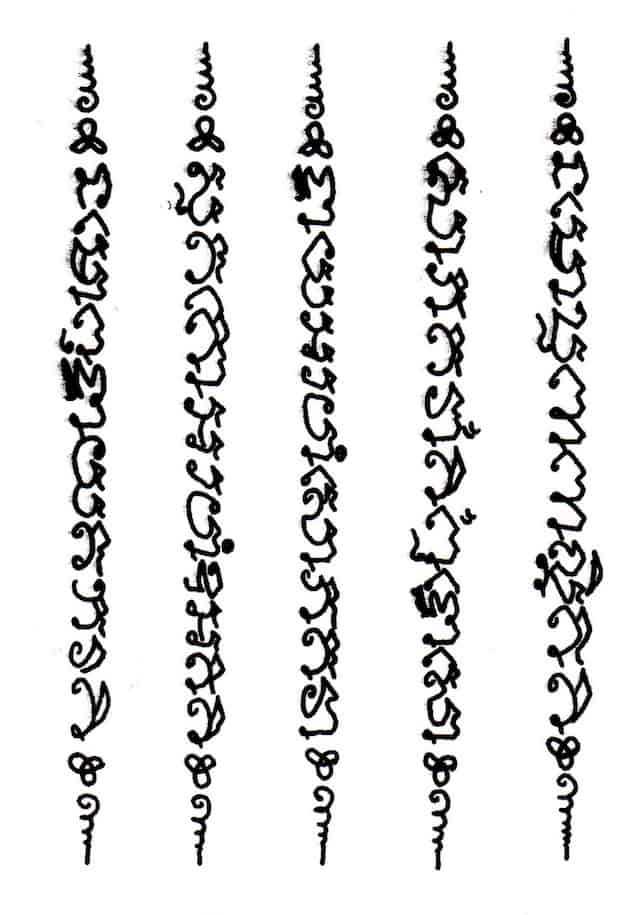
Ha-thaeo (Thai: ห้าแถว; translation: five lines) – The most common yantra, representing five lines of symbols. It is placed on the left shoulder. Usually each line is a spell for good luck, health, etc.
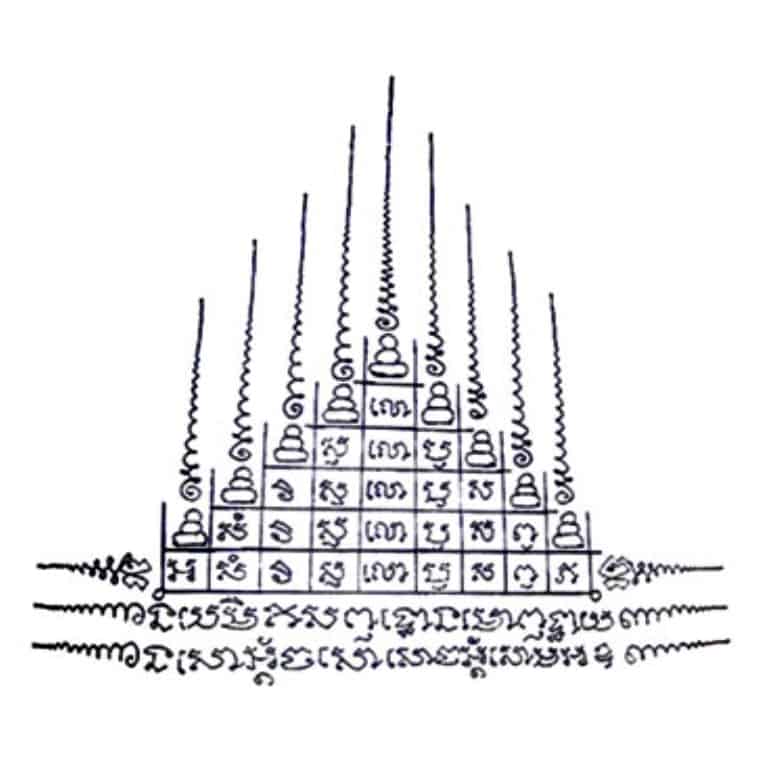
Kao-yot (Thai: เก้ายอด; translation: nine spires) – Usually placed on the back below the neck. Can be of varying sizes and complexity.
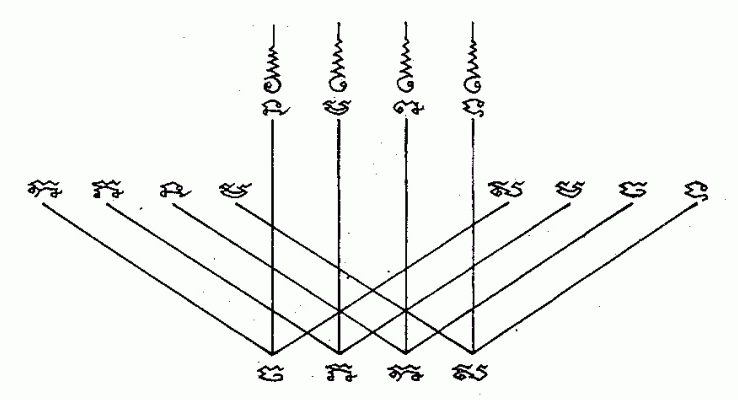
Si-yot (Thai: สี่ยอด; translation: four spires) – made to have influence over the feelings and actions of others, and to be protected from it oneself.
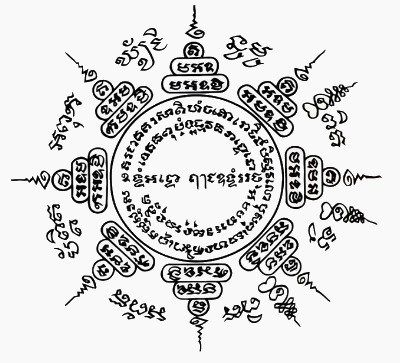
Paet-thit (Thai: แปดทิศ; translation: eight points) – gives protection to the eight directions of the universe. Round shape; usually placed in the centre of the back.
Sip-thit (Thai: สิบทิศ; translation: ten points) – a version of paet-thit, but protects in ten directions.
Maha-niyom (Thai: มหานิยม; translation: great advantage) – gives recognition and favour to the wearer in the eyes of others. Round shape; usually placed on the back near the right shoulder.
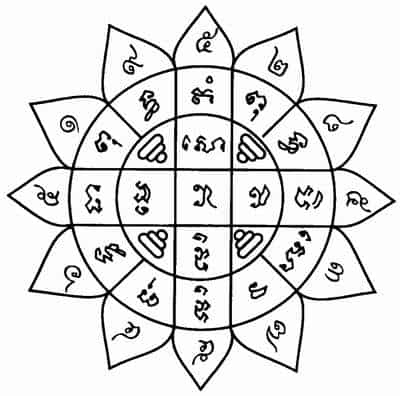
Yot Mongkut (Thai: ยอดมงงกุฎ; translation: crown with spire) – for success and protection in battle. Round shape; usually placed on the top of the head.

Panchamukhi (Thai: ปัญจมุขี; translation: five faces of the Devas) – to prevent disease and danger.

Suea (Thai: เสือ; translation: tiger) – usually in the form of two tigers. Strength and power.

Where to make Sak Yant in Thailand?
Ajarn Kob. Address: 4/1 MOO 5 Klongsabou Ayutthaya Ayutthaya 13000 Phone: 0815577958. Address in Thai: สำนักสักยันต อาจารย์ กบ อยุธยา ศิษย์หลวงปู่หน่าย ตำบลคลองสระบัว, 13000 Ayutthaya, Thailand
Ajarn Tong (AC Tong). Address: Thanon Terd Tai, Soi Petch kasem 23 (opposite Wat Pleng Temple) Address in Thai: สำนักสัก อาจารย์ทอง วัดเพลง ถนน เทอดไท ซอยเพชรเกษม 23 ปากซอยทางเข้า ตรงงข้ามกับวัดเพลง. Ajarn Tong does Yant intuitively. You will not be able to choose the sketch. When you visit, you need to take flowers and incense to be offered by the deities on the altar.
Pra Ajarn Hlek Dam. The address of the temple is Wat Nern Patanaa temple, Gong Tuul, Hnong Pai, Petchaburn. Address in Thai: สำนัก อาจารย์เหล็กดำ, Thailand. Phone: 081-9713514.
Wat Bang Phra Temple. The most popular temple at the moment, which is considered the centre of the Sak Yant tradition in Thailand.
Ajarn Pi Bang Grating. Address: 398 Moo 5 Soi Chatone -128 Wat Pra Non Tambon Don Gaew, Ampher Mae Rim, Chiang Mai. Phone: 0826270155 or 0900549985.
Ajarn Terng. Address: Soi Ekachai 109 in Bang Bon 3 , Bangkok 101500
Pra Ajarn Hlong. Wat Dtrai Ratanaram Temple. Ampher Gleng, Rayong Province.