

There are many large meteor showers in the UK every year, such as the Quadrantid meteor shower in January , the Perseid meteor shower in August and the Geminid meteor shower in December, known as the three major meteor showers in the northern hemisphere, and are some of the brightest, most reliable and prolific meteor showers of the year.
This post provides you with the 2024 UK meteor shower timetable, giving you a round-up of this year’s must-see and absolutely unmissable major meteor showers! Bookmark this post and get ready to see the next meteor shower!
MỤC LỤC
Large Meteor Shower in the UK 2024
Meteor Shower is an astronomical phenomenon in which a number of meteors are emitted from a single radiant point in the night sky. The following summarises the schedule of the most active and easily observable large meteor showers in the UK:
| 2024 Large Meteor Shower Calendar Schedule | ||||
| Meteor Shower | Active period | Peak | ZHR | Full Moon% |
| Quadrantids
Quadrantids |
December 28 – January 12 | January 3 – January 4 | 110 | 51% |
| Lyrid meteor shower
Lyrids |
April 14 – April 30 | April 22 – April 23 | 18 | 99% |
| Eta Aquarids
and Aquariids |
April 19 – May 28 | May 5-6, 2024 | 50 | 6% |
| Southern Delta Aquarids
Southern delta Aquariids |
July 12th – August 23rd | July 29 – July 30 | 25 | 95% |
| Perseid meteor shower
Perseids |
July 17 – August 24 | August 12th – August 13th | 100 | 10% |
| Draconids | Early October | October 6 – October 8 | 10 | 28% |
| Orionid meteor shower
Orionids |
October 2 – November 7 | October 21st – October 22nd | 20 | 37% |
| Leonid meteor shower
Leonids |
November 6 – November 30 | November 17 – November 18 | 15 | 23% |
| Geminids | December 4 – December 20 | December 14th – December 15th | 150 | 1% |
| Ursids
Ursids |
December 17 – December 26 | December 22nd – December 23rd | 10 | 74% |
- Active: dates when the meteor shower is active and stargazing enthusiasts can expect to see meteors.
- Peak: days when the greatest number of meteors can be expected to be observed.
- ZHR: Zenithal Hourly Rate (ZHR), the maximum number of meteors that can be seen per hour under ideal conditions.
- Full Moon %: The visibility of the meteor shower will be affected by the moonlight, the fuller and brighter the moon, the harder the meteors will be to see.
The best time to see
The visibility of a meteor shower depends on a number of factors, including the time of peak, the location of the radiant point, moonrise and sunset times, the phase of the moon, and the weather.
Meteor showers can only be seen when their radiant points are at or above the horizon, and the most meteors can be seen when the radiant points rise to their highest point, so most meteor showers are easier to see after midnight because their radiant points do not rise until after midnight.
Also, the closer you get to the radiant, the shorter the meteor paths are, and the paths are longer away from the radiant instead, so meteors appearing in areas of the sky about 30 degrees away from the radiant are usually more brilliant.
You can also go to TimeAndDate and set the location and date to see the predicted best time period for specific meteor showers that can be seen in your local area, as well as the recommended viewing direction and altitude for each time.
Best places to watch meteor showers
1. North York Moors National Park
North York Moors became a Dark Sky Reserve in December 2020, one of only 21 in the world. As a Dark Sky Reserve, North York Moors National Park offers unrivalled stargazing conditions away from the pollution of city lights. The open terrain and clear night skies make it an ideal place to observe meteor showers.
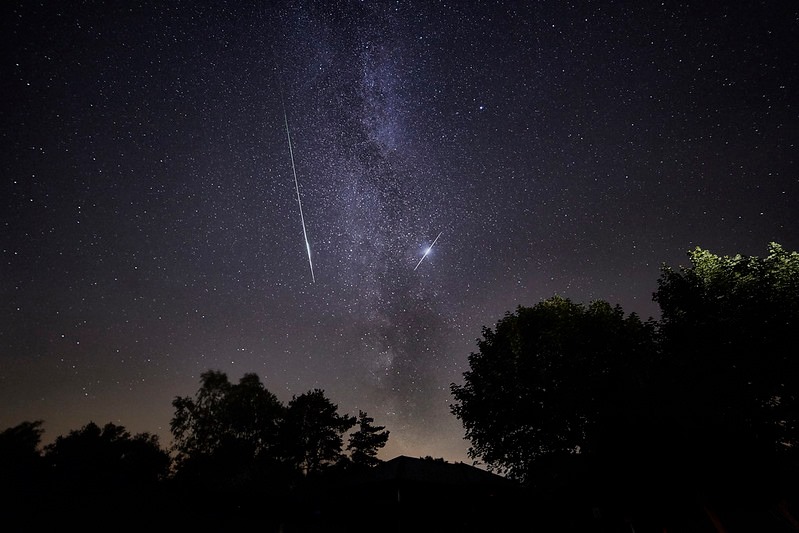
With low light pollution levels and a clear horizon, we are officially one of the best places in the country for stargazing. From towns or cities, you’ll be lucky to see more than a few stars, but the further you are from the streetlights, the better the view – in the darkest areas of the National Park, you can see up to 2,000 stars at once.
2. Brecon Beacons National Park
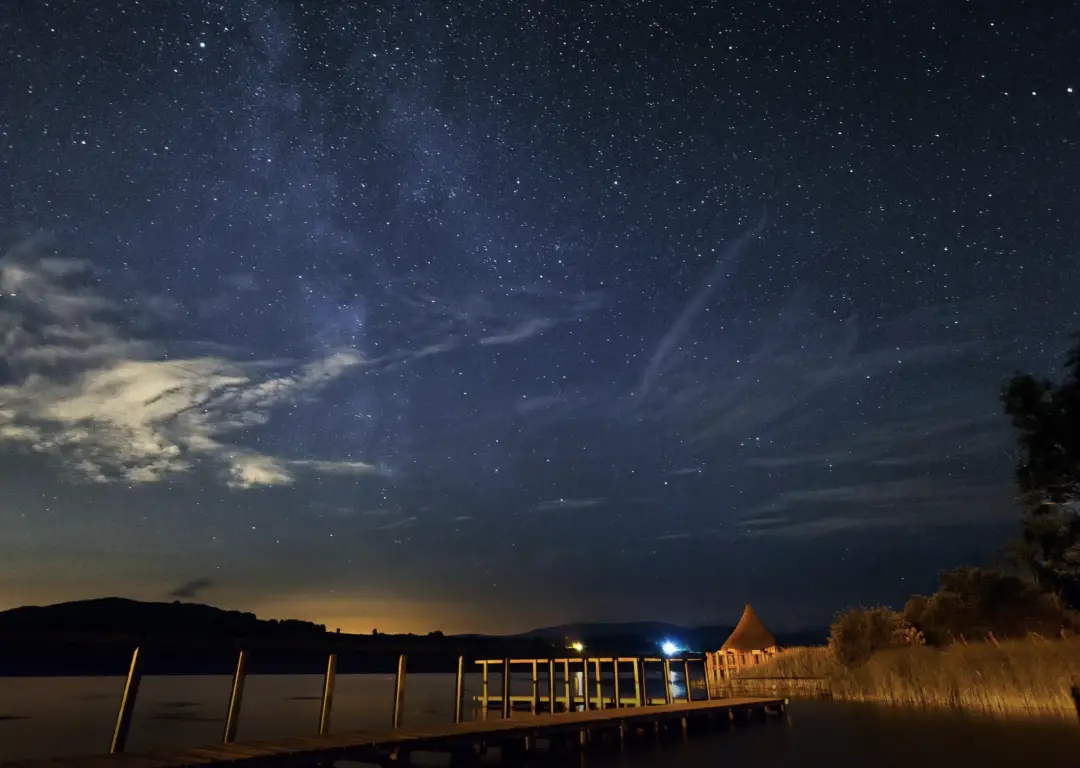
In 2012, BBNP Brecon Beacons National Park became the fifth destination in the world (and the first in Wales) to be accredited. Brecon Beacons National Park in Wales is also a Dark Sky Reserve. It has a varied terrain of mountains and hills for stargazing and camping. With some of the finest dark starry skies in the UK, it is an ideal destination for stargazers to come and stay.
3. Exmoor National Park
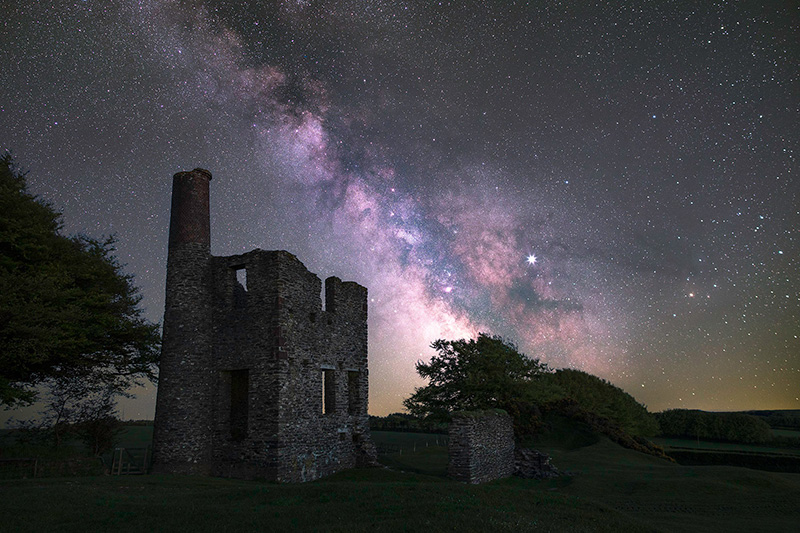
Exmoor National Park is renowned for its high quality dark skies and was designated as Europe’s first International Dark Sky Reserve in 2011, one of the first dark sky reserves in the UK. The night skies here are free from light pollution and are perfect for meteor shower spotting.
4. Cairngorms National Park
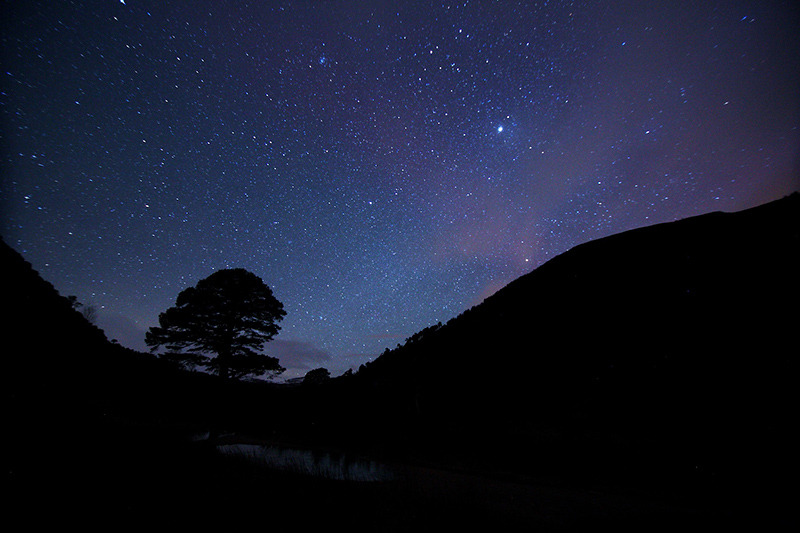
The Cairngorms National Park in Scotland, with its open vistas and pristine night skies, is a great place to watch meteor showers in the north. Tomintoul and Glenlivet, which have been awarded the ‘International Dark Nights Park’, are the most northerly parks of their kind in the world. Whether you’re a novice stargazer or a true astronomer, there’s nothing more relaxing and eye-opening than snuggling up on a hillside with a cup of hot chocolate and admiring the stars!
5. South Downs National Park
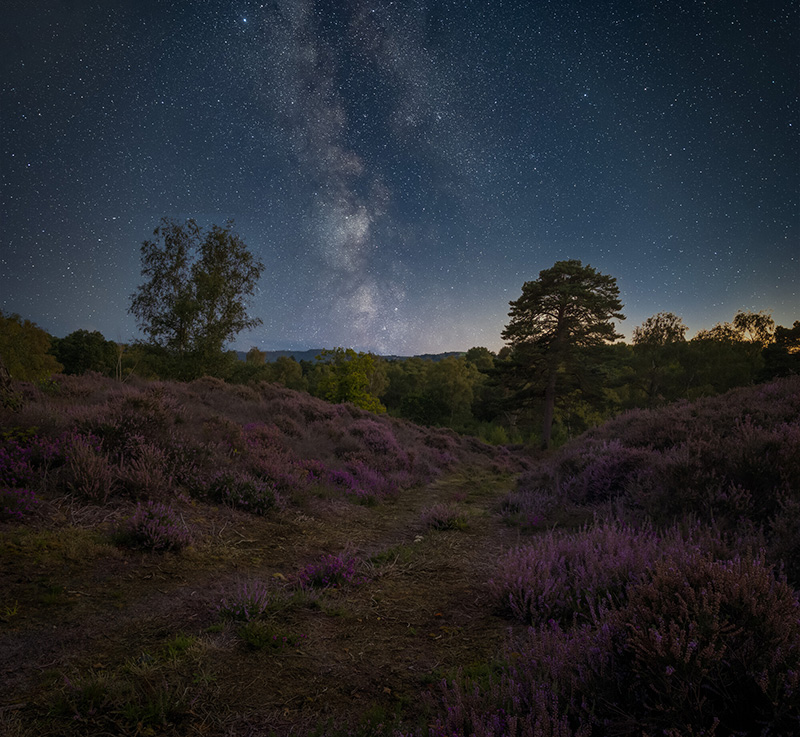
In May 2016, the South Downs National Park became the newest International Dark Sky Reserve (IDSR). Since then, other reserves have joined and are now part of the global family of 19 IDSRs. Despite its proximity to London, the South Downs National Park still maintains relatively dark skies for night-time stargazing activities. It’s also easy to get to for those of you who live in London.
6. Dartmoor National Park
Famous for its wilderness and open landscapes, Dartmoor National Park is a great stargazing location in the South West of England. Trips to Haytor and the River Belstone are recommended for their magnificent natural scenery as well as good stargazing.
Tips for shooting meteor showers
1. Choose the right camera app:
Download a camera app that allows you to manually adjust exposure time and ISO, such as ProCam X, Camera FV-5, etc.
2. Adjust the camera settings:
Exposure Time: Set to 15 seconds or longer to capture the movement of the meteor.
ISO Sensitivity: set to 800 or higher to increase the light sensitivity of the sensor, but be aware of noise issues.
Focus mode: Switch to manual focus and set the focus point at infinity.White Balance: Select Auto or Daylight
mode.
3. Stabilise the phone or camera:
Use a tripod or stabilising stand to fix your phone to avoid blurring caused by handheld shaking.
Take multiple photos in a row to increase your chances of capturing a meteor.
Choose a wide area of the sky and make sure the radiant spot is in the field of view.
Every meteor shower in 2024 adds endless glamour to British summer nights. Choose a dark sky reserve away from the city lights, pack comfortable gear and enjoy this magnificent celestial event with friends and family for an unforgettable experience.
Whether you are an astronomy enthusiast or a casual viewer, the UK meteor showers offer a profound experience of dialogue with nature. When the meteor shower arrives every year, look up at the starry sky, capture the light of the shooting star that breaks through the sky, make a good wish, and let this night be the most brilliant moment in your memory~~~