Nha Trang is a very spiritual land with many religious sites. Colourful Buddhist pagodas, Hindu temples, Gothic-style Christian Catholic churches left over from the French colonisers rise amongst the picturesque nature of the resort city. Therefore, every history and culture lover should visit the following popular churches, temples in Nha Trang.
MỤC LỤC
Churches in Nha Trang
Nha Trang Mountain Church
Nha Trang Mountain Church (official name: King Cathedral), also known as Christ the King Cathedral, is the largest Roman Catholic church in Nha Trang and the centre of Christianity in the region. It is located on top of a small hill in the city centre. The cathedral was inaugurated in 1933. It is known as Stone Church, as it is made entirely of stone.
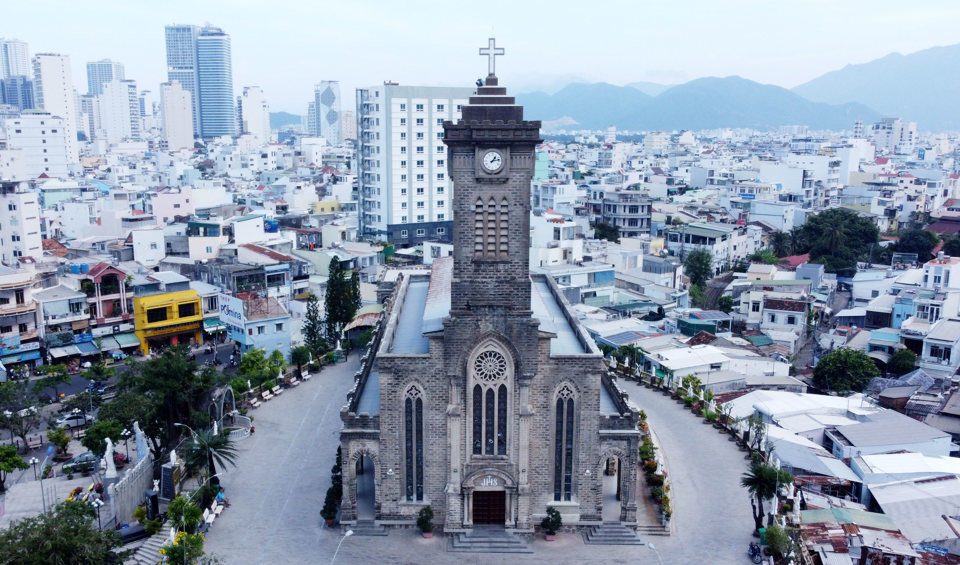
The cathedral was built by the priest Louis Vallee in the early 19th century in the classic French Gothic style with crenellated walls, a square clock tower, beautiful stained glass windows, and three bells cast in France in 1789. The outside of the church is decorated with statues of saints, including a sculpture of St. Mary. On the sides of the courtyard are 4,000 tombstones. The cathedral is open Monday to Saturday from 5:00 to 17:00, Sunday from 4:30 to 20:00.
Bac Thanh Church
Bac Thanh Church is a parish church located in the centre of Nha Trang. It was founded in 1958. The church building is 44 metres long, 12 metres wide, 14 metres high and includes a 25-metre bell tower.
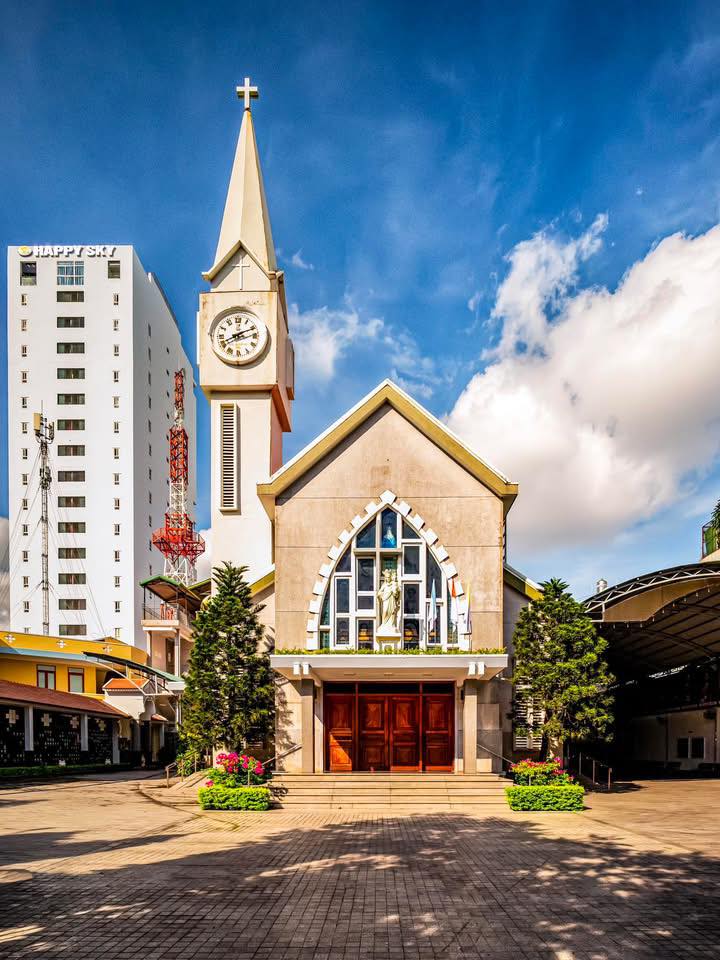
The two-storey complex has a prayer hall, a basement, a training room with a capacity for 250 catechist students, a reading room, a workroom and a guest room. St Joseph’s Hall is used for parish and pastoral activities. Weekday Masses are held at 5:00 am, 5:00 pm, 5:00 pm, 5:00 am, 7:00 am, 4:00 pm on Sunday.
Immaculate Heart Church
The Shrine of the Immaculate Heart (Nhà Thờ Giáo Xứ Khiết Tâm) is a Catholic church built in 1956 in a residential neighbourhood. The original structure of the church was damaged, so it was extensively reconstructed in 2003-2006, after which the area of the complex increased to 1,610 square metres. The prayer building is 46 metres long and 33 metres wide, with a height of 24 metres. The tall 8-storey bell tower adjacent to the building is 27 metres high.
Temples in Nha Trang
Long Son Pagoda
- Address: No 22, 23/10 street, Phuong Son ward, Nha Trang city
- Entrance fee: free
- Opening hours: daily from 7:30 to 17:30
Long Son Pagoda (Chùa Long Sơn – Đằng Long Tự) is the largest temple in Nha Trang, the Buddhist centre of Khanh Hoa province. It is located at the foot of Trai Thuy hill.
The pagoda was built in 1886 originally on a mountain called Dang Long Tu (‘Dragon Mountain’). In the 1900s, after a major hurricane, the complex was destroyed and it was moved to the foot of the mountain.
On the original site of the temple, a large white concrete statue of Gautama Buddha sitting on a lotus blossom, 24 metres high, was erected in 1964. The statue is visible from anywhere in the city and the site offers a panoramic view. There are 152 stone steps leading from the entrance to the pagoda.
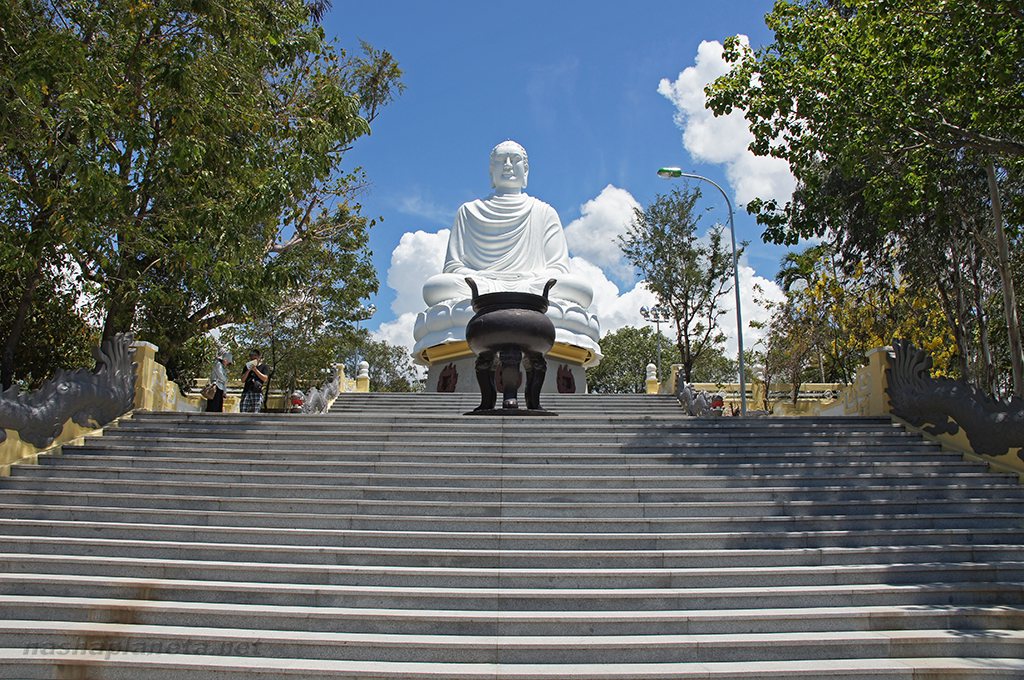
Interestingly, in addition to the main Buddha, in the traditional sitting posture, there is a statue of a reclining Buddha outside the temple. Also in the courtyard is a sculpture of the famous monk Thich Quang Duc, who committed self-immolation in 1963 in the centre of Saigon. The grounds include a garden with an artificial reservoir, a Buddhist school and an active monastery where monks live.
Pháp Viện Thánh Sơn
Pháp Viện Thánh Sơn or the Monastery of the Thanh Son is located on a hill surrounded by green fields in Khánh Xuân village of Dien Lam commune, 25 kilometres southwest of Nha Trang. The monastery is surrounded by flowers, plants, rice fields, lakes with many kinds of fish and misty mountain ranges. The picture is completed by the unique architecture with many statues of Buddha, bodhisattva, huge gold inlaid sculptures of Arhat.
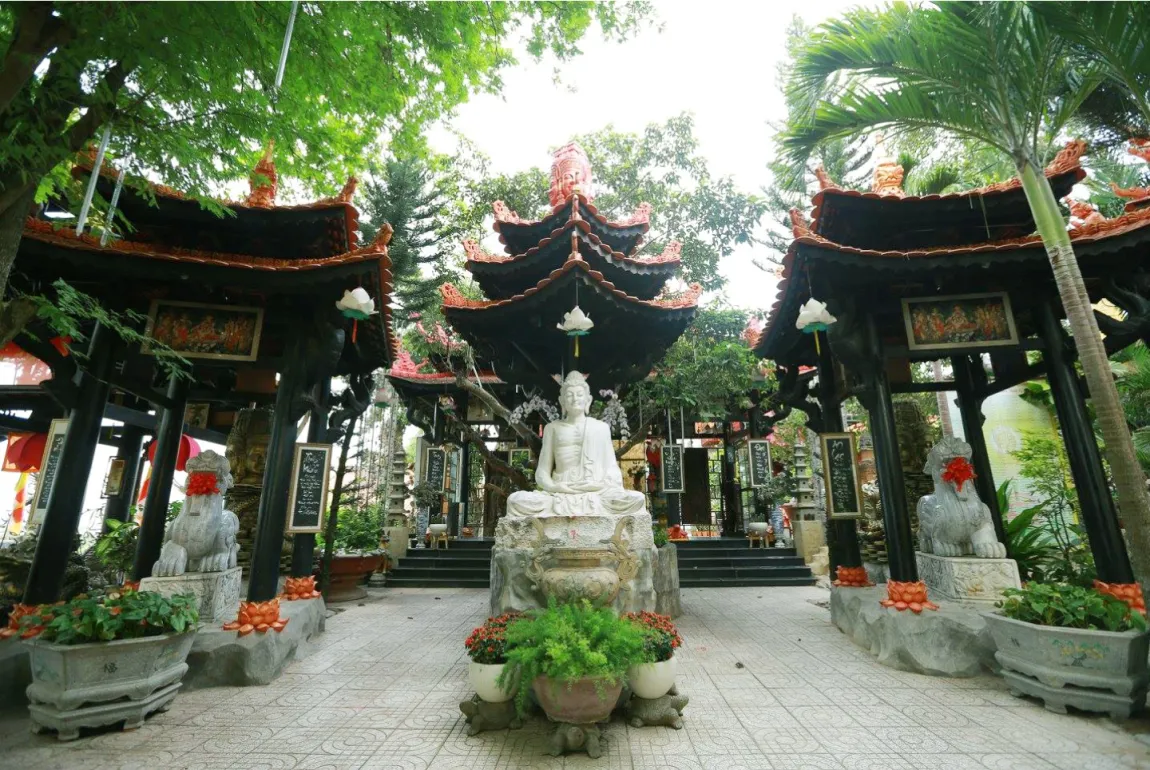
In the 20th century, a temple stood on the site, which was damaged by war. In 2006, local monks rebuilt the temple according to Indian and Myanmar styles. The temple grounds have many wooden tables, benches, stone chairs for guests to rest. The area is decorated with green arches of trees planted in 2 rows parallel and curved towards each other to form a dome. The pagoda is currently under construction and expansion.
Suoi Do Pagoda
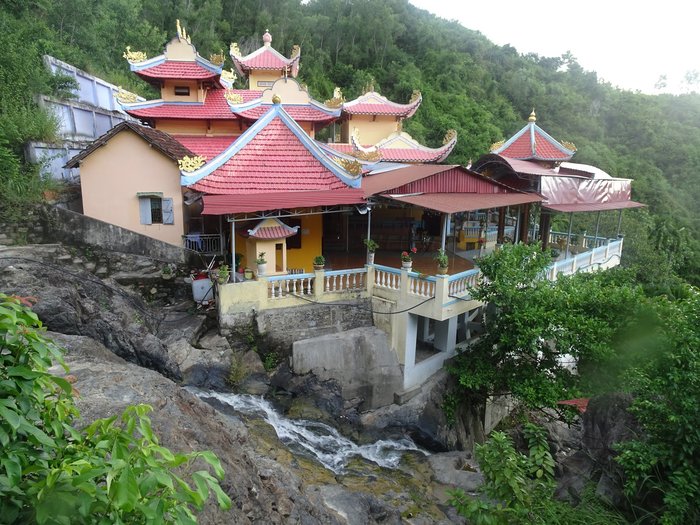
Suoi Do Pagoda (Chùa Suối Đổ) is a Buddhist temple on a mountain built 50 years ago in honour of Quan Am, the Chinese goddess of mercy. Locals call it the ‘Temple of the Falling Lotus’. The grounds include two temples – at the foot and on top of the mountain, which offers a beautiful view. The attraction is open daily from 6:00 am to 6:00 pm.
Tong Lam Lo Son Pagoda
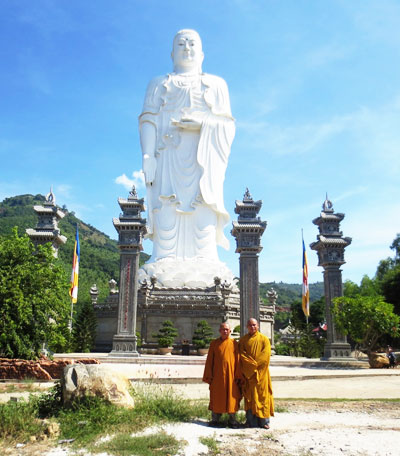
Tong Lam Lo Son Pagoda (Chùa Tòng Lâm Lô Sơn – Chùa Đá Lố) is a Buddhist temple with a large concrete statue of Amitabha Buddha. It was built in 1954 on Da Lo Mountain in Như Xuân village by the supreme Buddhist monk Thích Chánh Ký. The main structure of the complex is a giant white concrete Buddha statue 44 metres high, the largest in Vietnam. A visit to this pagoda offers true peace of mind in the lap of nature. The attraction is open every day from 9:00 to 17:00.
Loc Tho Pagoda
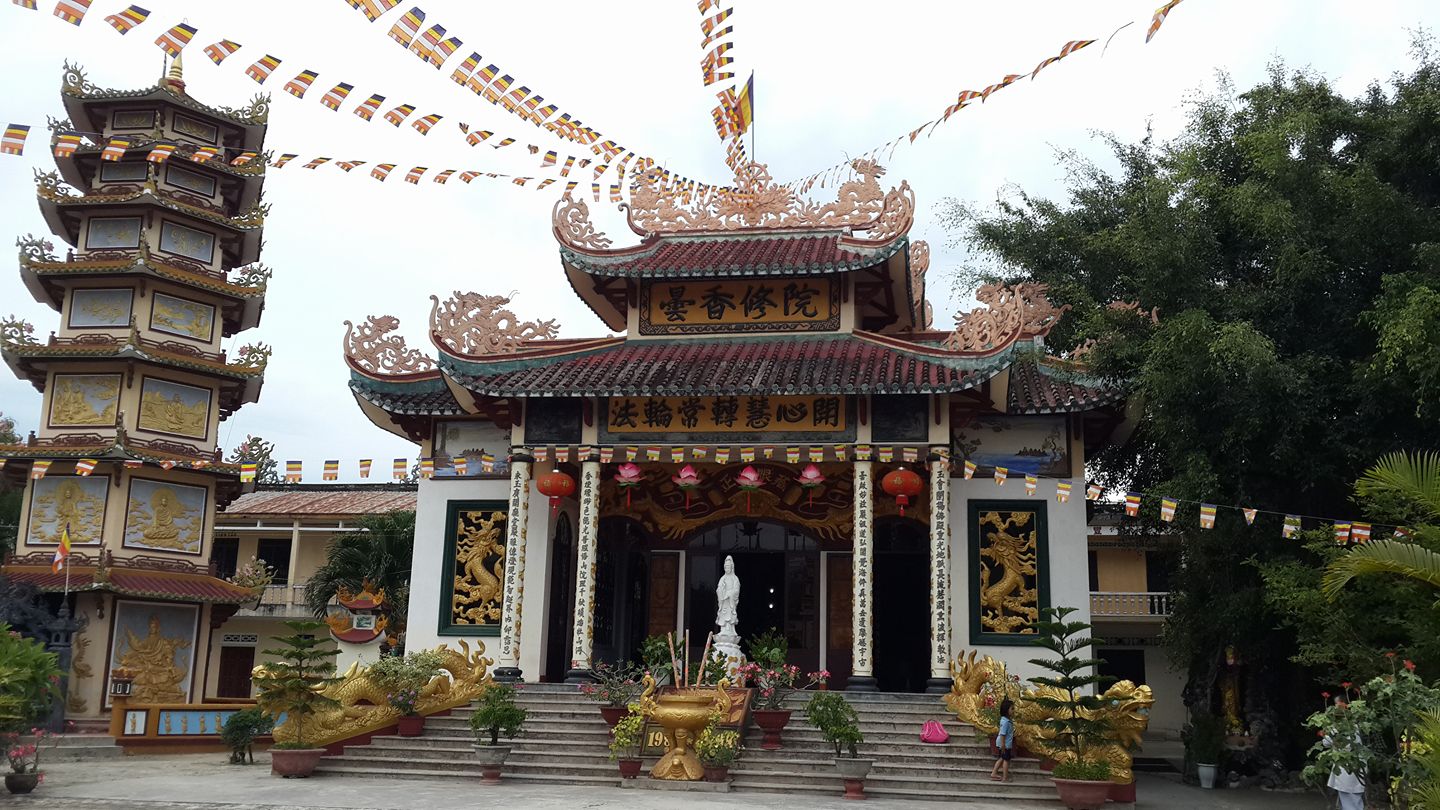
Loc Tho Pagoda (Chùa Lộc Thọ) is located in Ngoc Hoi village, 4 km north of the tourist centre of Nha Trang. The complex is lavishly decorated with gilding, paintings and carvings. The main building for prayers, bell tower, gates are decorated in the same style. There is a school for orphans and children from low-income families, opened in 1991, which was founded by Sister Thich Nu Dieu Y. 160 students under the age of 9 are studying here, most of whom live in the Pagoda.
Da Bao Pagoda
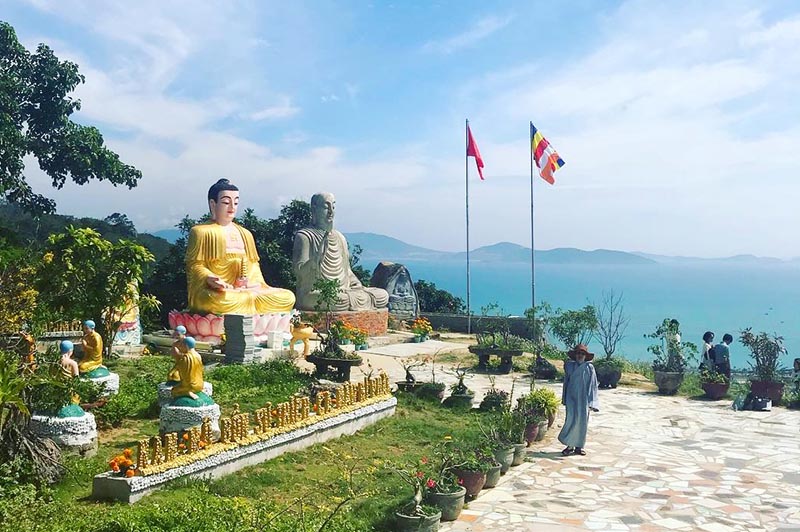
Da Bao Pagoda (Chùa Đa Bảo) is located on the slope of Cô Tiên Mountain on the northern outskirts of the city. The temple is still being developed after monk Thích Giác Mai rebuilt the huts for spiritual practice more than 20 years ago. Zen masters decorate the complex with ornamental plants and raise fish in ponds. The view of the South China Sea in harmony with the sound of bells is stunning, creating a sense of calm and tranquillity.
Phuoc Hue Pagoda
It is a traditional Buddhist temple erected in 1959 by monks Thich Bich Lam and Tay Son as a place to stay, train the Sangha, and worship the Buddha. The appearance of the pagoda dates back to the 18th century. The complex has undergone many changes due to harsh climatic conditions and military events.
The temple covers an area of 3,152 square metres surrounded by rice fields. The area includes the pagoda courtyard, Buddha temple, east and west houses, and Am Nhac temple.
Phuoc Hue organises Buddhist events every year with two main festivals: the Buddha’s birthday (April 15 lunar calendar) and Vu Lan (July 15 lunar calendar). The pagoda is recognised as a local historical and cultural relic.
Buu Phuoc Pagoda
- Map: Phuc Son, Nha Trang
- Opening hours: 9 am – 5 pm
Buu Phuoc Pagoda was founded in 1955 by monk Lê Văn Hé on Sạn mountain in the western part of Nha Trang. In 1995, a temple 60 metres long and 60 metres wide was built on this land as a modest four-level building with a tiled roof, brick walls.
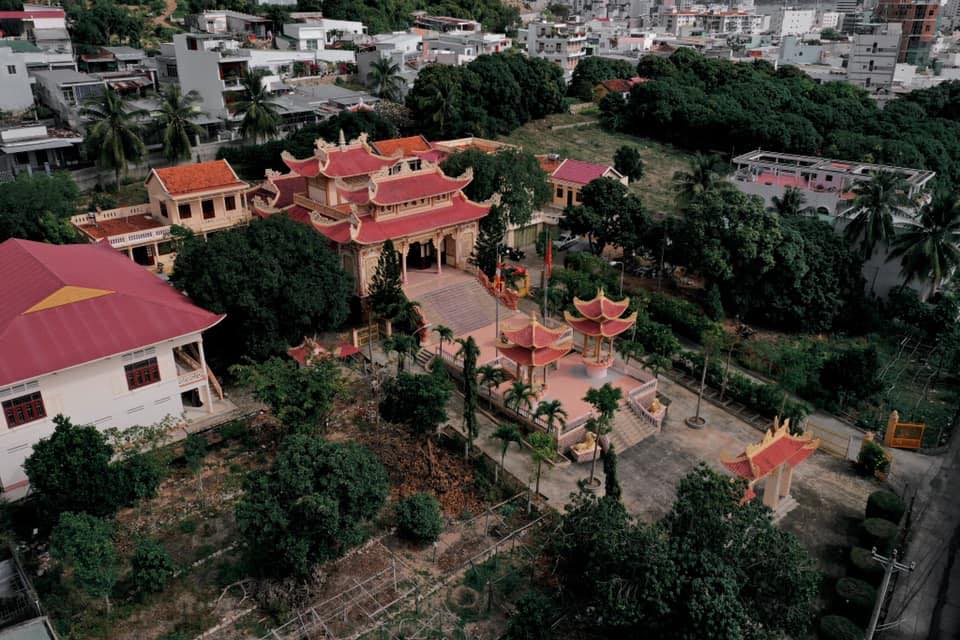
The Pagoda is in the ancient style with a curved roof decorated with a dragon flower. In front of the temple courtyard, to the left of the entrance is a statue of Guan Yin Buddha. She holds a branch of peace and willow, with a tolerant and gentle face. On the right is a statue of Maitreya with a welcoming smile, reminding Buddhists that the body and mind are always at peace. Behind the building are guest houses and an orphanage.
Po Nagar Cham Towers
- Map: 61 Hai Thang Tu Street, Vinh Phuoc, Nha Trang
- Entrance fee: VND 30,000 per person
- Opening hours: daily from 6am to 5.30pm.
The Cham Towers are an ancient three-level temple complex built between the 8th and 11th centuries by the Hindu Cham people in honour of the goddess Jan Po Nagar (‘Mother of the Country’). The towers are located on the riverside slope of Cu Lao Mountain, a few kilometres north of the city centre.
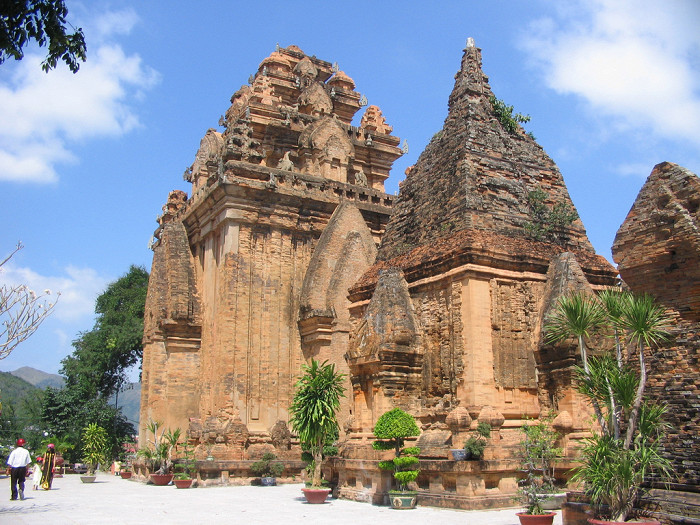
The structure consists of red brick with projecting support frames, tapering roofs. Of the 10 east-facing buildings dedicated to Hindu deities, four have survived. The tallest of these, the Po Nagar Kalan, is 25 metres high. In the main pyramidal hall is a black stone statue of the goddess Uma with 10 arms up to the ceiling. Locals worship the gods here during the annual Tap Ba religious festival held in late April/early May.
Temples in Nha Trang are religious sites that have become national cultural relics of Vietnam and popular tourist attractions due to their rich history, unique architecture, and surrounding views. The active monasteries, Buddhist pagodas, and Catholic churches dotted around the city give a sense of deep peace and tranquility.