
If you are looking to marvel at Vietnam’s most beautiful terraced rice fields, your compass should point north towards the mountains! This majestic region, sculpted by nature and the meticulous work of man, is home to true open-air masterpieces. Sapa and Mu Cang Chai, names that inspire dreams! But we have a surprise for you… There are other hidden treasures for those who dare to venture off the beaten track.
In this article, we will guide you through the most beautiful rice terraces in Vietnam and give you all our practical advice to make your getaway perfect: the best itineraries for admiring these landscapes, the best weather for taking great photos, and many other tips to make this adventure an unforgettable experience.
MỤC LỤC
Terraced Rice Fields in Sapa
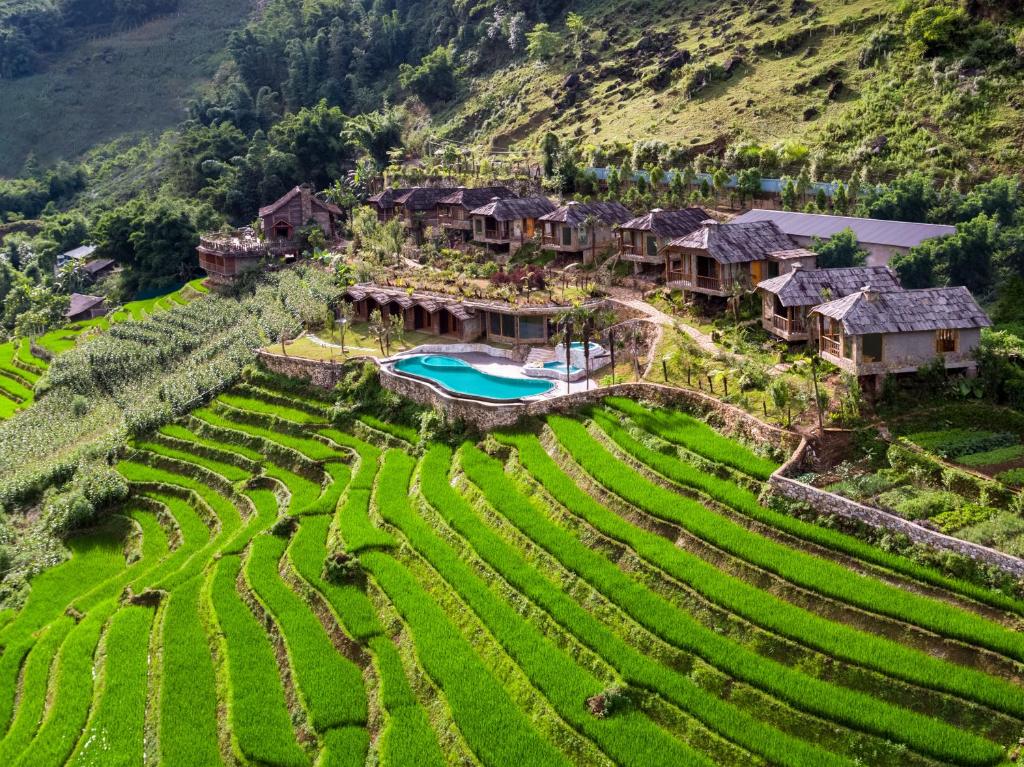
If Vietnam is a jewel box of beauty, its terraced rice fields are its gems, and Sapa is their signature. With nearly 1,000 hectares recognised as a national natural heritage site, these rice fields, green or golden depending on the season, create a breathtaking panorama. They seem to stretch endlessly, bearing witness to the hard work of the Hmong, Dao and Tay peoples, who have carved the mountainside to cultivate their land.

But Sapa’s appeal doesn’t stop there. For thrill seekers, the region offers a multitude of adventures. You can climb Mount Fansipan, nicknamed the ‘roof of Indochina’, and admire the view from its summit at an altitude of over 3,000 metres, or tackle the O Quy Ho Pass, one of the most impressive in Vietnam. In September 2025, the travel platform Agoda named Sapa one of the most popular mountain destinations in Asia, a distinction it was the only Vietnamese destination to receive.
Want to see the terraced rice fields in all their splendour before anyone else? Head to Sapa, where the fields turn golden long before the other regions of the Northwest.
Where to go to enjoy them?
To admire the most beautiful terraced rice fields in Sapa, don’t miss the following villages: Ta Van, Lao Chai, Ta Phin, Cat Cat, Ban Ho, Y Linh Ho and Nam Cang.
Mu Cang Chai rice terraced fields
Imagine yourself in the heart of a landscape that seems straight out of a dream. This is not fiction, it is Mu Cang Chai, a destination that Wanderlust Storytellers magazine has ranked among the 25 most surreal landscapes in the world. But to understand the power of this place, it is not enough to look at photos: you have to go there and let your senses be amazed.
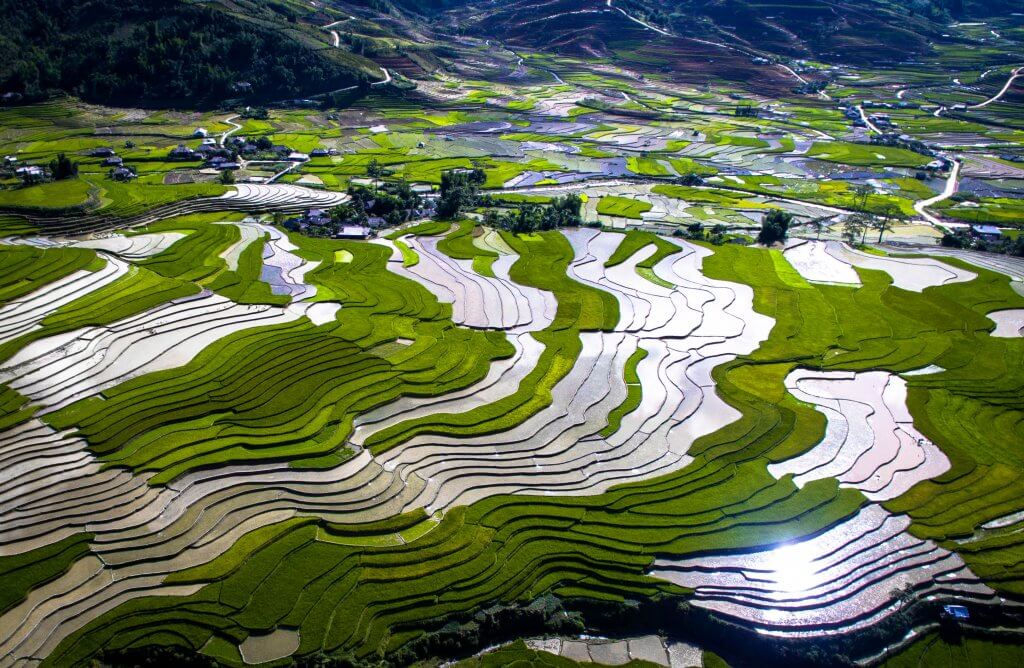
Here lie the largest terraced rice fields in Vietnam and the second largest in the world, just behind those of Banaue in the Philippines. It is therefore no surprise that Mu Cang Chai is a must-see destination for nature and photography enthusiasts, especially during the harvest season, when the mountains are draped in their most beautiful golden colours.
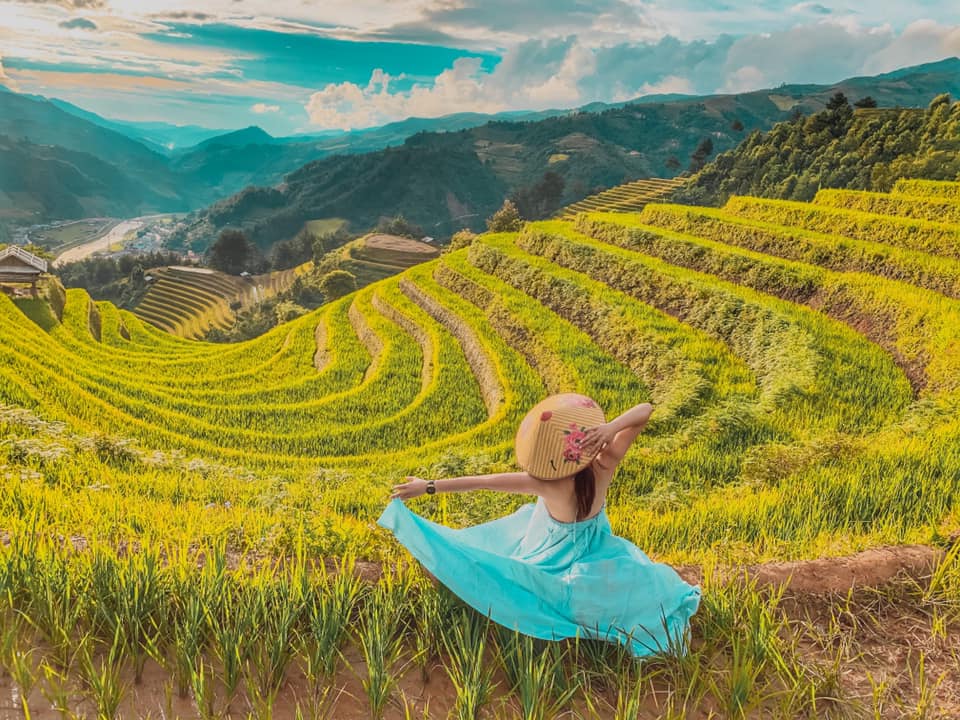
Where to go to enjoy it?
Every corner of the place has its own story, but two places steal the show and have become the symbols of Mu Cang Chai:
Mam Xoi Hill (Sticky Rice Plateau) in La Pan Tan: Its evocative name refers to its perfectly circular shape. Under the harvest sun, the place becomes a veritable spectacle of light and colour, a snapshot that all travellers want to capture.
Mong Ngua Hill (Horse’s Hoof) in Che Cu Nha: Often considered even more breathtaking by those who venture there, it offers a unique perspective.
Accessing these mountains is a real expedition, with winding and steep roads, but the panorama that awaits you at the summit makes every effort worthwhile.
Less grandiose than their cousins, the 600 hectares of terraced rice fields of De Xu Phinh, perched at an altitude of over 1,200 metres, prove that beauty is not just a question of size.
Before reaching La Pan Tan, a stop at the Khau Pha Pass is a must. Thrill seekers flock here for one simple reason: it’s the ideal spot for paragliding. Even if the idea of launching yourself into the air makes you shiver, the spectacle on the ground is just as spectacular. The dazzling panorama, a reward in itself, promises memories that will last a lifetime.
Hoang Su Phi rice terraces
If the call of adventure and the raw beauty of Ha Giang fascinate you, prepare to succumb to the charm of the Hoang Su Phi rice terraces. While the rice fields of Mu Cang Chai are rather isolated, those of Hoang Su Phi are integrated into the villages. You will not be a mere spectator, but a guest. You will walk alongside local communities, such as the Hmong, and discover how their lives are intertwined with these landscapes.

Where to go to enjoy them?
The most beautiful scenes await you in the villages of Ban Phung and Ho Thau, where the concentration of terraces reaches its peak.
To capture the magic of the ‘golden season’, follow the advice of seasoned photographers: take the route from Thong Nguyên to Ban Phung, via Nam Khoa and Ta Su Choong. Once in Ban Phung, at an altitude of 1,200 metres, you will be overwhelmed by a sea of golden rice fields surrounding the traditional houses of the La Chi people.
But Hoang Su Phi is much more than just a picture postcard. It offers an immersion into the heart of the ethnic tribes that inhabit these lands, the Dao, Hmong, Tay and La Chi. Share their daily life, explore their colourful weekly market, savour cuisine that tastes of the land and discover that the real treasure of this region lies in the hearts of its inhabitants. It is a human adventure that goes beyond simply contemplating the landscape.
Y Ty Rice Terraced Fields
About two hours from Sapa is Y Ty, a more discreet and authentic destination, but just as captivating. Far from the crowds, this village has preserved its wild charm, offering travellers in search of nature and serenity a real gem: terraced rice fields of raw beauty at an altitude of over 2,000 metres.

Where to go to enjoy them?
Here, the fields of Ngai Thau, A Lu and The Pa merge with the sky and clouds. Amidst this sea of mist, the silhouettes of the Ha Nhi ethnic group’s earthen houses stand out, creating a rustic and peaceful scene.
Take the time to stroll through the ethnic markets of Y Ty or Muong Hum, where locals gather, dressed in their colourful traditional costumes. You may even have the chance to take part in traditional festivals linked to the agricultural cycle, such as rice sowing and transplanting ceremonies. These rituals, intended to pray for good harvests and favourable weather, are a golden opportunity to mingle with local communities and share in their daily lives.
Fancy a hike off the beaten track? Enthusiasts can set out to conquer Mount Lao Than, the ‘roof of Y Ty’. The climb is rewarded with spectacular views, a true paradise for those seeking to escape the crowds.
Bac Ha rice terraces
While Sapa is the star of rice terraces, Bac Ha, its cousin, is its best-kept secret. At an altitude of nearly 2,000 metres, the rice terraces of Bac Ha offer a spectacle that is sure to leave you speechless. At sunrise, a veil of morning mist envelops the hills, transforming the landscape into a delicate watercolour painting in shades of jade and earth.
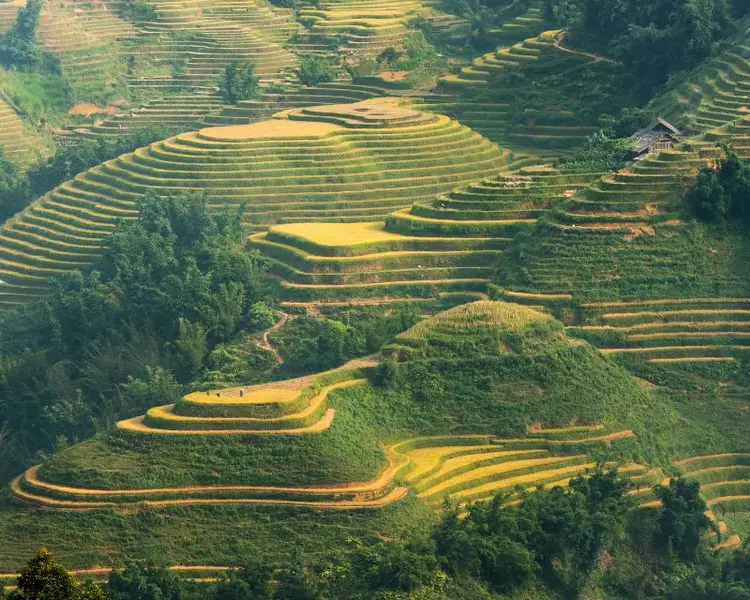
Where to go to enjoy it?
For photographers and nature lovers, the terraces of Thai Giang Pho and Lien village are unmissable spots, offering extraordinary beauty.
Far from the crowds, a trip to Bac Ha is also an invitation to meet new people. You can learn about rice farming alongside the Tay and Hmong ethnic groups, share a meal, or fish in the streams. Authenticity is at the heart of every interaction, and spending a night with a local family is a unique opportunity to immerse yourself completely in local life.
See more: Vietnamese rice, much more than a food
Pu Luong rice terraces
More discreet than its neighbours with their vertiginous rice terraces, Pu Luong charms visitors with its gentleness and tranquillity. If you long to get away from the crowds and recharge your batteries in the heart of unspoilt nature, this is the place for you. It’s an invitation to disconnect, a haven of peace where you can relax with your family or partner.
Where to go to enjoy it?
It is while walking through Ban Don that you can admire the region’s magnificent terraced rice fields. The gently winding road is an invitation to stroll, where every step is a discovery. Early in the morning, mist and clouds float delicately between the mountains, offering a magical spectacle. It is a scene you will never tire of.
If adventure calls you, get ready for an unforgettable getaway to the village of Kho Muong. Cut off from the rest of the world and nestled deep in a remote valley, this village is well worth the effort. Access is difficult, with narrow roads and numerous bends. But once you arrive, you will understand that it was worth the effort.
When to visit the rice terraces in Vietnam?
Imagine a panorama that takes on new hues as the months go by, changing colours, lights and even scents. While many think that autumn is the ideal time to admire the rice terraces in Vietnam, let us prove to you that the other seasons also have their own unique charm.
The water season (April to May)
This is when farmers flood the terraces to prepare for rice planting. The landscape takes on a raw and wild appearance. It is a palette of sober colours where the brown of the earth blends with the blue sky and the sparkling reflections of the water. During the day, the terraces glisten, almost golden in the sun. At night, they transform into a mysterious work of art, bathed in the silvery glow of the moon. Every patch of water becomes a mirror, creating a gigantic, magical tableau.
This is an ideal time for hikers. Although temperatures begin to rise at the end of May, the climate is perfect for exploring: little rain, lots of sunshine and pleasant temperatures.
The green season (July to August)
Even though northern Vietnam is hot and humid in the height of summer, make no mistake: this is the time of year when nature bursts into life. Bright green rice seedlings cover the hills, offering a panorama of intense freshness. Afternoon showers, frequent at this time of year, make the colours even more vibrant, and the air at altitude is more breathable than in the plains. It’s an opportunity to see life in the rice fields at its peak.
The golden season (September to October)
This is undoubtedly the most magical time to admire the rice fields of the north. The landscapes of the northern mountains, from Pu Luong to Sapa and Hoang Su Phi, are adorned with a flamboyant yellow. The air is filled with the sweet smell of grain.
Many hills are entirely golden, while others are a patchwork of green and yellow, with some plots already harvested. The locals are busy harvesting, and even though the work is intense, there is a palpable joy on their faces. It is a picture of nature’s generosity and simple, profound joy.
It is undoubtedly the ideal time to take photos and immerse yourself in the beauty of the landscape, under clear skies and perfect temperatures. A real feast for the eyes and the soul.
So, which season appeals to you the most?